
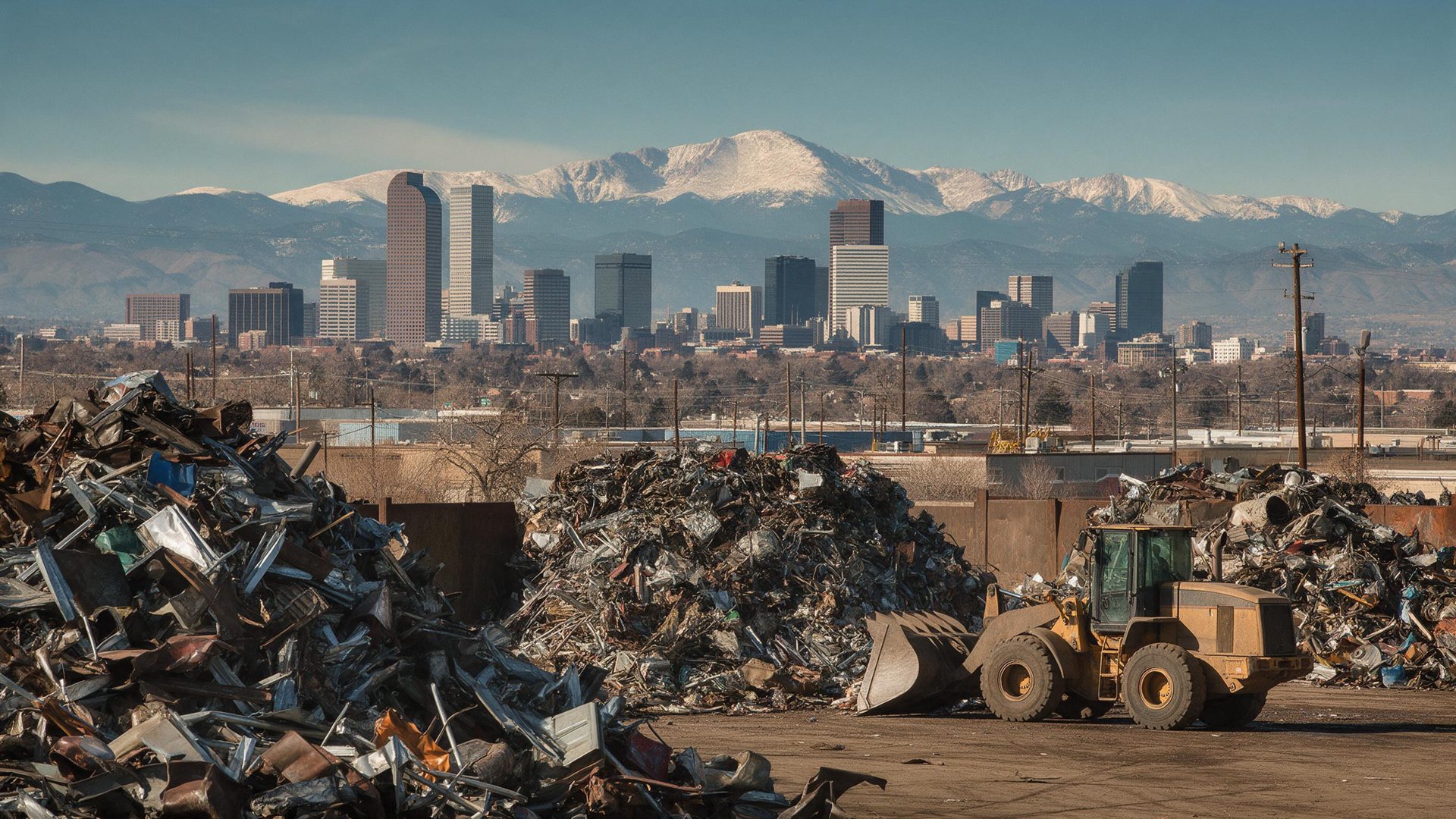
Sell Front Range scrap before the next freeze locks it to the driveway
Burst-pipe copper in Lakewood, refinery-corridor steel in Commerce City, a dead truck in Parker. Send a photo.
Live market spot prices, just for reference. Yard prices for scrap are lower and depend on grade.
Live metal spot prices
Local prices vary by yard. Send a photo for a quote. The figures above are live market spot prices from gold-api, for reference only — not a local scale ticket.
Sorting is necessary
Freeze-thaw leaves pipe wet and full of mud. Drain copper and keep it off the ice. Magnesium chloride from the streets rides in on car bodies and floor pans — yards see that corrosion and grade it.
What usually pays
How it works
Send us a message
We cover Denver and the Front Range towns below. Foothill drives and alley widths matter. No street address is published here.
Denver Scrap is an independent referral service that connects you with local scrap yards.
What the Front Range puts on a scale
Mid-century suburbs and burst pipes
A hard Front Range cold snap is a scrap event. Lakewood, Aurora, and the older Denver neighborhoods give up copper supply lines and brass valves after a pipe lets go, often mixed with wet drywall. That copper is good metal having a bad week. Keep it separate and say it was a burst, so nobody expects bright clean sticks.
Newer sections in Thornton, Parker, and parts of Broomfield produce builder cutoffs instead. The metal is short, clean, and frequent during the building season, which here has a real winter pause.
Freeze-thaw, road treatments, and afternoon hail
Denver’s scrap calendar is a winter problem and a construction-season problem. From late fall through March, cars and pipe suffer. Magnesium chloride and freeze-thaw pit steel. In late spring and summer, hail cores — especially east and southeast — total vehicles that still look drivable from ten feet away. Photograph the glass.
Foothill addresses in Golden and the west side add another limit: a driveway grade a loaded truck will not climb after snow, and a turnaround that does not exist. Say it before the route is set.
Refineries, offices, and campus rentals
Commerce City’s industrial north is the heavy end: shop steel, tanks that must be empty and documented, and warehouse racking. That is not a Capitol Hill alley load. The Denver Tech Center and the office parks in Centennial and Broomfield produce cable and tenant-improvement scrap on a landlord clock.
Boulder and the rental belts add appliances twice a year and the occasional lab or shop cleanout that needs written permission. Gold and silver show up in the same moves — a drawer of coins is not scrap steel.
Questions people ask
Are the spot figures Denver yard prices?
No. They are live market references. Local prices vary by yard. Send a photo for a quote.
Do you take metal from the foothills?
Golden and the west-side towns are listed. Steep drives and snow need to be in the note. A partner yard decides if the route works.
Is a street address listed?
No. The buying yard handles receiving. This page is a service-area lead.
Towns around Denver
Commerce City steel and a Boulder rental turnover should not share a description. Pick the town page.
Sort scrap metal before requesting a Denver quote
A magnet is a quick first check, not a complete grade test. If it sticks, the piece is usually ferrous, such as iron or steel. If it does not, it may be copper, aluminum, brass, or another non-ferrous metal. Stainless steel can behave differently depending on its composition. Keep magnetic and nonmagnetic material in separate piles, and describe anything uncertain rather than guessing.
Copper grades depend on cleanliness and what is attached. Bare bright is clean, uncoated copper wire with no solder or insulation. #1 copper is clean pipe or other solid copper without substantial attachments. #2 may have solder, paint, or other contamination. Insulated wire is graded with its insulation included, so do not assume stripping it will improve the return.
Brass valves and fittings are worth separating from copper and steel, even when they look similar. Remove obvious steel handles or other attachments only when they come off safely and easily. Aluminum also has different forms, including cans, clean sheet, cast parts, and material with steel or plastic attached. Keep types apart when practical and tell the yard what is mixed.
Clean material generally means metal without dirt, fluids, insulation, or unrelated parts. Mud, wet drywall, plastic, and attached hardware can change how a yard grades a load. Sorting does not need to become a demolition project. If separating a piece would take more time or create a hazard, leave it intact and include a clear photo and description in the request.
Wire, appliances, and vehicles: details Denver yards may ask about
Stripping insulated wire is a tradeoff. It can take time, create sharp offcuts, and damage copper if you use a tool carelessly. Since insulated wire is commonly graded as it arrives, ask the receiving yard how it handles your wire type before stripping a large quantity. Keep wire sorted by type if possible, and do not burn insulation; burning creates hazardous smoke and can leave the copper contaminated.
Refrigerators, freezers, air conditioners, and some other appliances can contain refrigerant. The refrigerant must be properly recovered before the appliance is processed as scrap. Do not cut refrigerant lines, puncture sealed components, or put an intact unit into a metal pile. Ask the yard whether it accepts the appliance and what condition it needs to be in before arranging transport.
A catalytic converter is not ordinary loose steel. Its value and acceptance depend on identification and the receiving yard’s requirements. Keep it attached to the vehicle when possible, or retain information that helps identify it if it has already been removed. Ask what proof of ownership, identification, or other paperwork the yard requires before bringing or arranging pickup for a converter.
For a junk car, ask the receiving yard what title or ownership documents it requires before setting a pickup time. Requirements can vary with the vehicle and the circumstances, so do not rely on a general online answer. Have the vehicle’s year, make, model, location, and title status ready. Mention missing keys, flat tires, blocked access, or parts already removed so the yard can assess the vehicle accurately.
Prepare a scrap pickup request and compare the yard’s terms
This site sends requests to independent partner yards; it does not buy or grade scrap. A photo can help a yard understand the material, but it is not a scale ticket or a guaranteed offer. Send clear pictures from more than one angle, include an object for scale when useful, and list the material types, approximate amount, and whether anything is mixed or attached.
Before a pickup, make the load reachable without asking a driver to move loose sharp metal by hand. Keep people and pets away from the loading area. Point out stairs, narrow gates, low branches, soft ground, overhead wires, and any vehicle that cannot roll. Do not stack material where it could shift or fall, and leave heavy lifting or cutting to someone equipped to do it safely.
Ask the partner yard how it handles weighing, payment, identification, and any paperwork before committing. Confirm whether the quoted figure is only an estimate, whether the yard needs to inspect or weigh the material first, and what could change the grade. Compare quotes using the same description and load details. A number based on clean separated copper is not comparable to one based on mixed, insulated material.
For a large cleanout, make an inventory before the truck is scheduled. Note any sealed tanks, appliances, vehicle parts, or material that may need special handling, and ask whether the yard accepts each item. Keep the request focused on what is actually available and its location. If the plan changes, update the partner yard before pickup so it can confirm that the route and load still work.
More questions
How can I tell whether a metal is ferrous or non-ferrous?
Try a magnet on a clean area of the item. A strong attraction usually indicates iron or steel, while copper, aluminum, and brass generally do not attract a magnet. This is a sorting aid, not a complete identification method. Coatings, attached fasteners, and some stainless alloys can confuse the result, so describe uncertain pieces to the yard.
Should I strip insulation from copper wire before asking for a quote?
Not automatically. Stripping takes labor and can expose you to sharp ends or tool injuries, while yards commonly grade wire with insulation as a separate material. Ask the receiving yard how it grades the specific wire you have and whether stripping makes sense. Never burn insulation to remove it; smoke and residue create hazards and may affect acceptance.
What makes bare bright copper different from other copper?
Bare bright is clean, uncoated copper wire without solder, insulation, or attached material. Copper pipe, painted copper, soldered pieces, and insulated cable are typically considered different grades. A photograph may not reveal every detail, so keep the types separate when practical and let the yard make the final grade determination after inspection.
Can I include a refrigerator or air conditioner with my scrap?
Ask the partner yard before arranging transport. Refrigerators, freezers, and air conditioners can contain refrigerant that needs proper recovery before processing. Do not cut lines or puncture sealed parts to prepare the unit. Tell the yard what appliance it is and whether it has already been serviced, then follow its instructions for acceptance and handling.
What should I do with a catalytic converter before selling a junk car?
Ask the yard what identification and ownership paperwork it requires. A converter may need to be identified separately from ordinary vehicle scrap, and acceptance terms can vary. If it is still attached, say so when describing the car. If it has been removed, provide any identifying information you have and do not assume the yard will accept it without documentation.
Do I need a title to arrange junk car pickup?
The receiving yard sets its documentation requirements, and they can depend on the vehicle and ownership situation. Contact the yard before scheduling and explain whether the title is available, missing, or not in your name. Have the vehicle details ready. Do not assume that a photo or a registration document will replace whatever paperwork the yard requires.
What information helps a partner yard assess a pickup request?
Share clear photos, the material types, an approximate amount, and the pickup town or location details requested. Mention whether the metal is mixed, dirty, attached to other material, or difficult to access. For a vehicle, include its basic details, title status, and whether it rolls. The yard may still need to inspect or weigh everything before confirming a final grade.
How should I make a scrap load safer before pickup?
Keep sharp pieces stable and away from walking paths, and do not stack material where it can slide or topple. Point out access limits such as narrow gates, overhead wires, stairs, or soft ground. Avoid cutting sealed equipment or handling unknown fluids. If an item is too heavy or awkward to move safely, leave it in place and tell the yard.
See the products we recommend in the Scrap and Metal Shop at Landforms USA.
Open this site on your phone

Denver Scrap
denverscrapbuyer.com
Point your phone camera at the code