
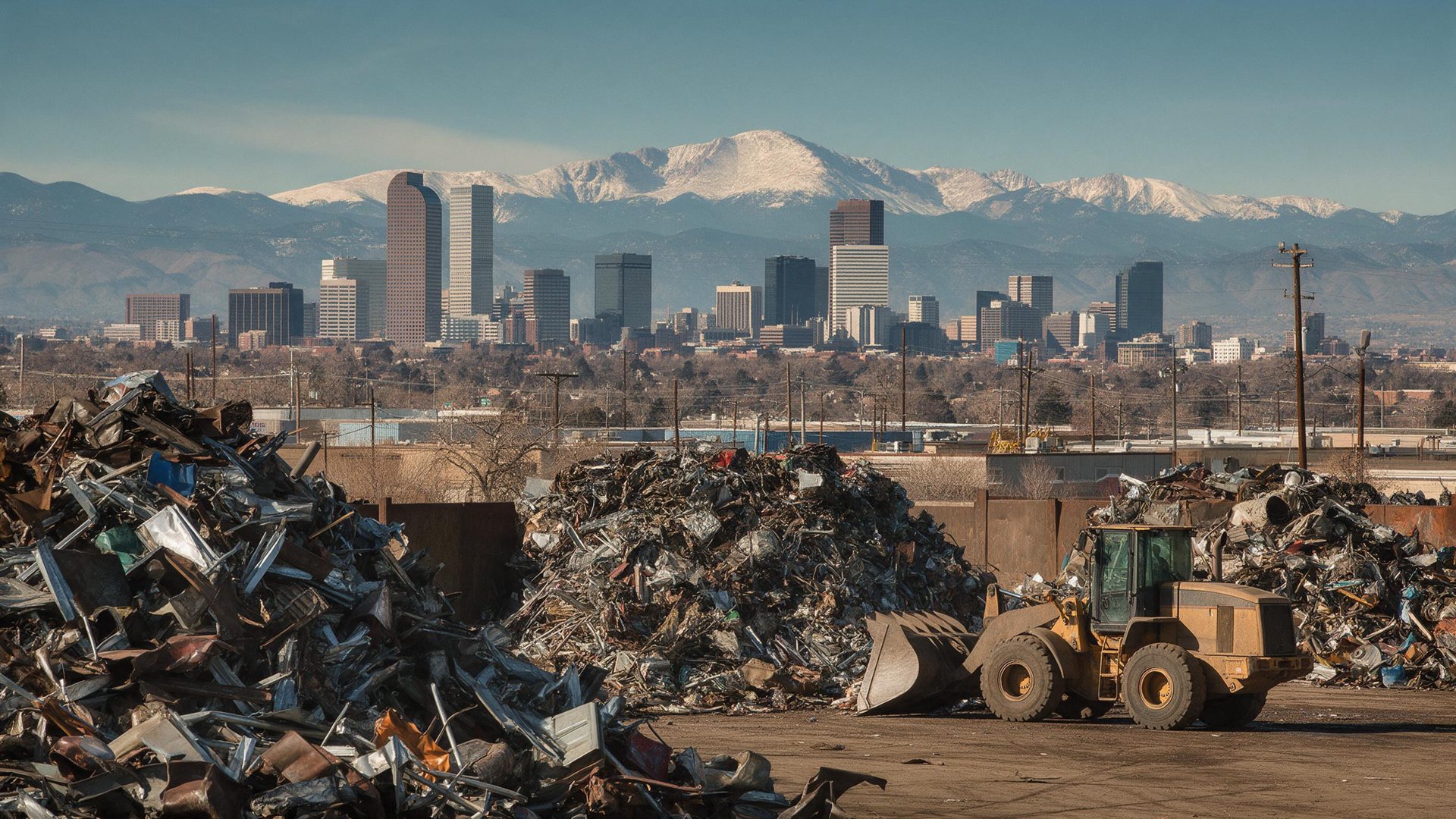
Centennial combines the Tech Center with ordinary south-metro houses
The Denver Tech Center edge produces tenant-improvement cable, ladder rack, and light steel when a suite turns. Permission and a dock schedule are the whole lead. The residential parts of Centennial are established suburbs: furnace swaps, a little copper, hail cars after a storm that tracked south.
Hail photos should show glass and roof-line dents, not just a clean side panel. Yards and tow drivers both use that to judge the stop.
Local prices vary by yard. Send a photo for a quote. We do not publish a Centennial scale sheet.
Denver Scrap is an independent referral service that connects you with local scrap yards.
Contractor scrap form · Gold and silver · Cash for cars
Sort Centennial scrap by metal, not by pile
A magnet is a quick first check, not a complete grade test. If it sticks, the piece is likely ferrous steel or iron; if it does not, it may be copper, aluminum, brass, or another non-ferrous metal. Some items combine materials, so separate obvious steel from non-ferrous pieces and keep uncertain items aside. A yard makes the final grade decision when it inspects the load.
Copper wire can be valued differently by condition and type. Bare bright is clean, uncoated copper wire; #1 and #2 copper have different levels of oxidation or attached material, while insulated wire still has its coating. Do not assume removing insulation will pay off: stripping takes time, and the yard’s grade and handling rules affect what is accepted. Ask the receiving yard how it wants mixed wire sorted.
Brass fittings and aluminum parts are easier to assess when kept separate from steel and from each other. Dirt, plastic, screws, solder, and attached insulation can affect how a piece is graded. Remove loose non-metal debris when practical, but avoid cutting or dismantling unfamiliar equipment just to make a cleaner pile. Keep sharp edges and heavy pieces stable so they do not shift during loading.
Plan a Centennial scrap or vehicle pickup before loading
Before arranging a pickup, describe the material and its location clearly. Note whether it is loose, bundled, inside a building, or behind a gate, and whether a vehicle can reach it. Keep the path clear and separate items that need different handling. This helps a partner yard or tow operator assess the stop without assuming that every pile can be loaded with the same equipment.
Appliances can contain refrigerant, which needs proper evacuation and handling. Do not cut lines or try to release refrigerant yourself. Ask the yard or service provider what condition it accepts and who is responsible for handling the refrigerant before moving the appliance. For other equipment, remove loose contents and keep doors or panels secure when possible; follow the handler’s instructions for safe loading.
For a junk car, ask the tow provider and yard what ownership documents and identification they require before scheduling. Requirements can vary by vehicle and provider, so do not assume a title can be skipped. Remove personal belongings, make the keys available if you have them, and tell the provider about missing wheels, blocked access, or other conditions that could affect loading. Front Range Quotes connects sellers with independent partner yards; those yards handle weighing, payment, and ID procedures.
Questions
Does a magnet tell me exactly what grade my scrap is?
No. It helps separate many steel and iron items from non-ferrous metals, but it cannot determine copper or aluminum grade, cleanliness, or whether a material has attached components. Some items are mixed or coated. Use the magnet as a sorting aid, then let the receiving yard inspect and grade the material.
Should I strip insulation from copper wire before asking for a quote?
Not automatically. Stripping takes time and can create sharp waste, and insulated wire may be accepted as its own category. Whether stripping makes sense depends on the wire and the yard’s grading and acceptance rules. Ask the partner yard how it wants the wire presented before spending time processing it.
Can I put a refrigerator or air conditioner out with ordinary scrap?
Ask the yard or service provider first. Refrigerant must be handled properly, and you should not cut lines or release it to prepare an appliance. Tell the provider what kind of unit you have and whether it has already been serviced. Confirm who is responsible for any required refrigerant handling before pickup.
What paperwork should I have for a junk car in Centennial?
Ask the tow provider or receiving yard what documents and identification it requires for your specific vehicle. Title and ownership requirements can depend on the circumstances, so confirm them before booking. If paperwork is missing or the vehicle is not registered in your name, explain that when you request a quote rather than assuming it will be accepted.
What should I do before a scrap pickup arrives?
Separate materials where practical, remove personal items from vehicles, and make the load accessible without placing people near unstable piles or sharp edges. Tell the provider about gates, tight access, heavy items, or a vehicle that cannot roll. Do not dismantle appliances or equipment in ways that could expose refrigerant, stored energy, or hazardous components.