
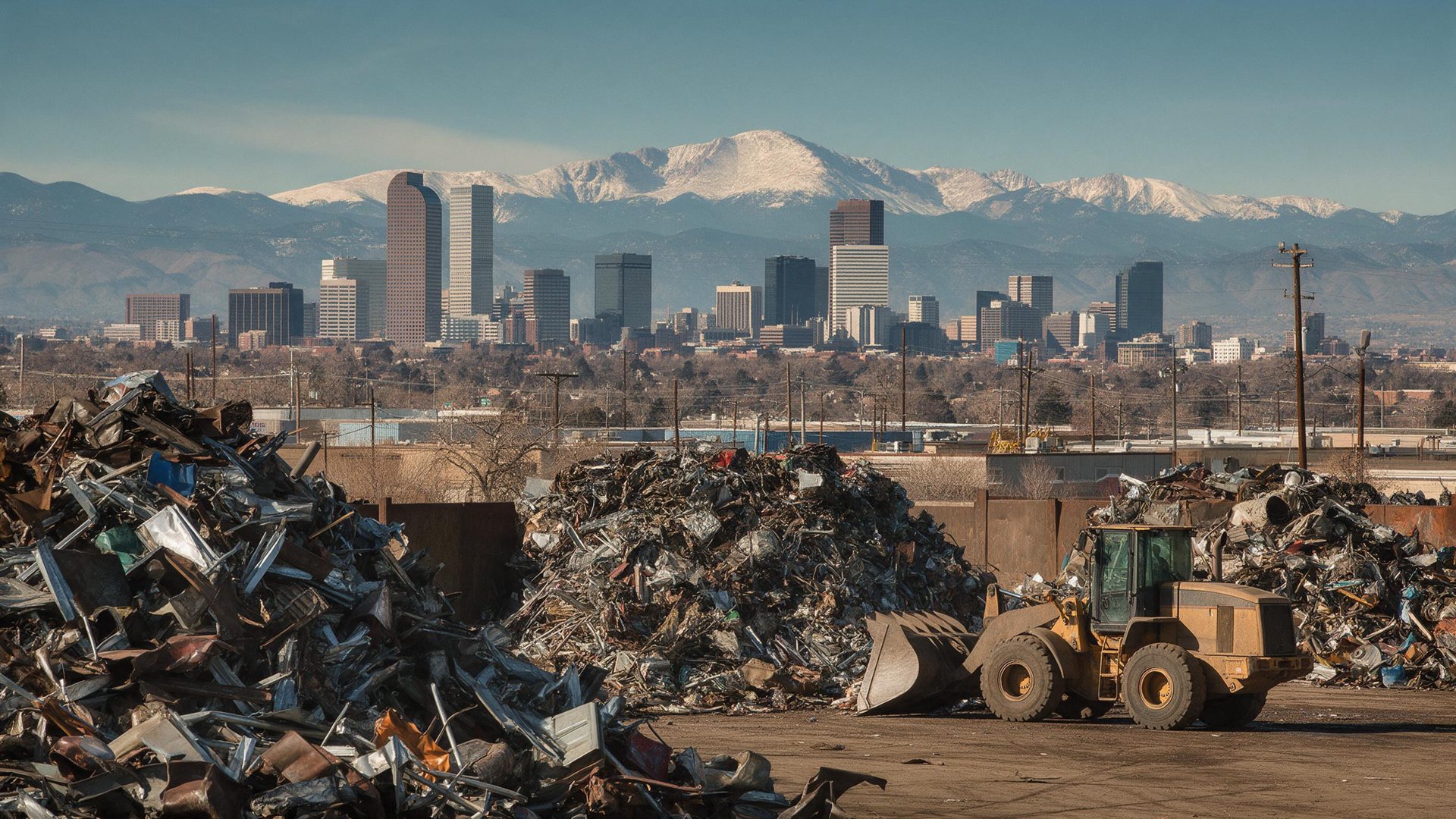
Commerce City is the industrial lead, not a bungalow repipe
Commerce City’s yards, shops, and warehouse rows are where Front Range scrap gets heavy: racking, plate, equipment frames, and the occasional tank. Tanks and drums need to be empty and described. A yard can refuse a mystery vessel, and it should.
There are houses here too, with ordinary appliances and cars. Do not wrap them into an industrial description. A residential driveway and a plant gate are different routes, and the north wind off the plains makes an uncovered pile travel.
Local prices vary by yard. Send a photo for a quote. We do not publish a Commerce City scale sheet.
Denver Scrap is an independent referral service that connects you with local scrap yards.
Contractor scrap form · Gold and silver · Cash for cars
Sorting Commerce City scrap by metal and grade
Start by separating ferrous metal, which contains iron, from non-ferrous metal such as copper, aluminum, and brass. A magnet is a useful first check: if it sticks firmly, the piece is likely ferrous. It is only a sorting aid, not a grade test. Plated parts, mixed assemblies, and some stainless steels can complicate the result, so keep uncertain pieces separate for the yard to inspect.
Copper grades can differ even when the metal looks similar. Clean, uncoated bare bright copper is usually treated differently from copper with solder or fittings, and insulated wire is graded with its covering in place unless the yard says otherwise. Brass is often found in fittings and valves; keep it apart from copper and steel. Ask the receiving yard how it wants mixed or attached pieces sorted.
Aluminum also has distinct forms, including clean extrusion, cast parts, sheet, and cans. Keep those types separate when practical, and remove obvious steel attachments if they come off safely. Dirt, oil, plastic, rubber, insulation, and concrete can make a load harder to grade or less useful. Do not spend time cleaning every piece before asking whether that preparation changes the yard’s acceptance or price.
Preparing an industrial scrap load in Commerce City
For a pickup or drop-off, send clear photos of the material and describe what it is, roughly how much there is, and whether it is loose or still attached to equipment. Include access details such as a narrow gate, overhead obstruction, or material that cannot be reached by a truck. A photo is a starting point, not a confirmed weight or final grade; the yard determines those after inspection and weighing.
Keep material stable and separate sharp, heavy, or awkward pieces so they cannot shift during loading. Wear gloves, eye protection, and sturdy footwear when sorting, and do not climb unstable piles or cut sealed containers. Leave suspected chemical containers, pressurized vessels, and unknown contents for qualified handling. Ask the yard what it will accept before loading anything that may be contaminated or unsafe.
Large equipment can contain more than one saleable metal, but dismantling is not always worthwhile. Removing attached motors, wiring, or non-metal parts takes time and may introduce hazards; compare the effort with the yard’s grading instructions first. This site connects sellers with independent partner yards. The yard handles inspection, scale tickets, payment, and any identification it requires; there is no published Commerce City price sheet.
Questions
Does a magnet tell me what grade my scrap is?
No. It can help separate many iron and steel items from non-ferrous metals, but it cannot identify the exact alloy, cleanliness, or payable grade. Some stainless steel may not react as expected, and coatings or attached parts can mislead. Keep uncertain metal separate and let the receiving yard make the final grade determination.
Should I strip insulation from copper wire before selling it?
Not automatically. Stripping takes time and can create sharp scraps or expose you to unsafe cutting methods. Yards may accept insulated wire in separate grades, while clean bare bright copper is assessed differently. Ask the intended yard what wire types it accepts and whether stripping is worth the effort for your particular load.
Can I bring in an old refrigerator or air conditioner as scrap?
Ask the yard before transporting it. Refrigerators, freezers, and air conditioners may contain refrigerant that must be properly recovered by qualified equipment and personnel; do not vent it or cut refrigerant lines. The yard can explain its acceptance requirements and whether the appliance needs to arrive intact or with documentation.
What should I know before selling a catalytic converter?
Keep the converter intact and do not remove identifying marks. Many yards require identification and paperwork to establish that the seller may legally transfer it, and acceptance rules can vary. Contact the yard before bringing one in, ask what documents it requires, and do not assume a photo alone is enough to complete a sale.
What should I have ready for a junk-car pickup?
Ask the car buyer what title or ownership documents it requires before scheduling; requirements can depend on the vehicle and situation. Have the vehicle’s location, condition, and access details ready, and remove personal items. Confirm whether the pickup can reach it safely. The independent buyer handles its own inspection, paperwork, weighing if applicable, and payment.