
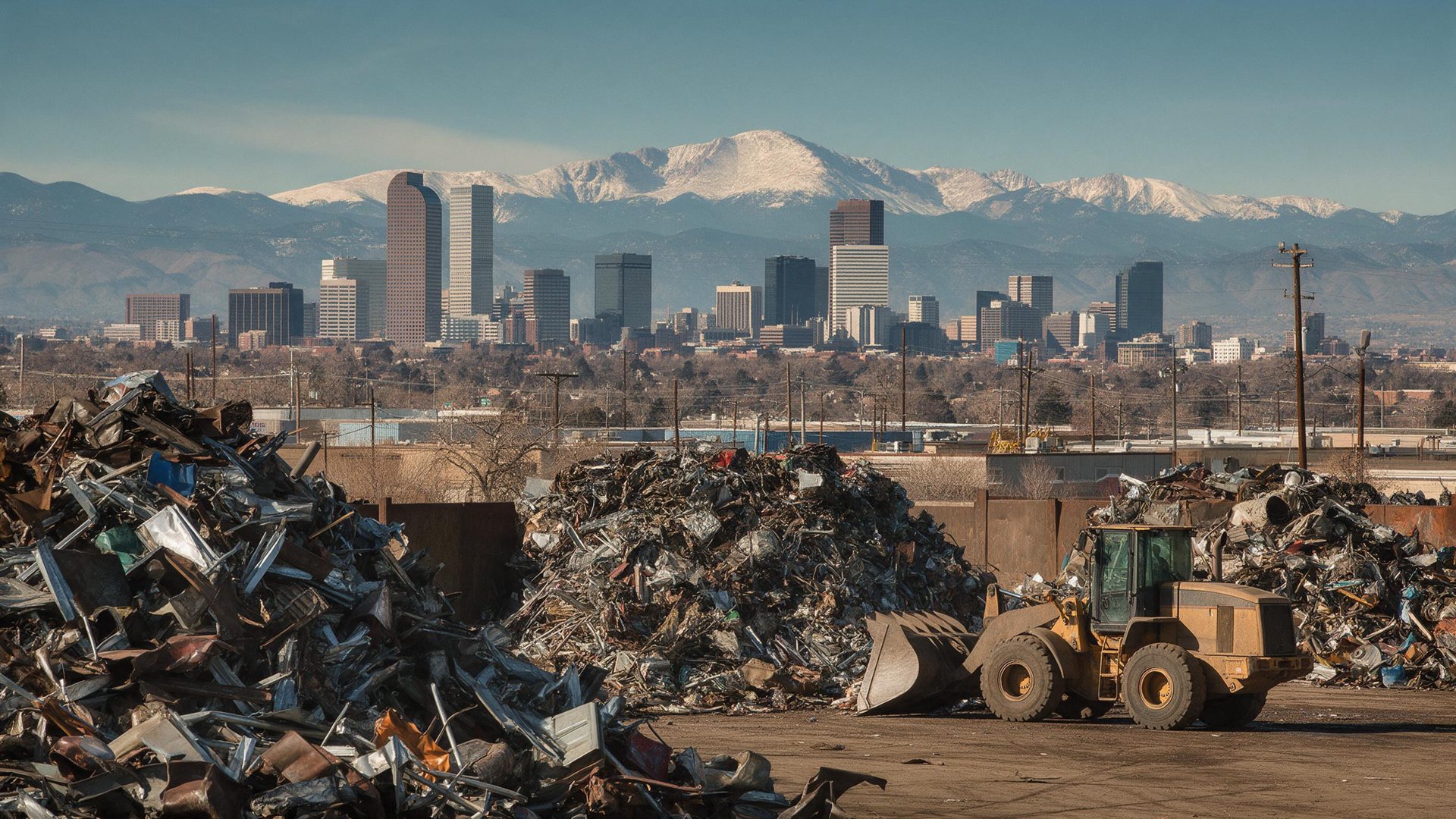
Parker piles sit on bigger lots, often out of sight of the street
Parker and the Pinery-style lots give people room to store a dead truck, a trailer, and a shop pile for years. When it finally moves, the volume surprises everyone including the owner. Photograph the whole row, not the one shiny piece in front.
Newer sections are ordinary builder cutoffs and hail cars. Wind out on the open southeast side throws debris into open trailers — tarp a non-ferrous load or expect it to arrive dirty.
Local prices vary by yard. Send a photo for a quote. We do not publish a Parker scale sheet.
Denver Scrap is an independent referral service that connects you with local scrap yards.
Contractor scrap form · Gold and silver · Cash for cars
Sorting scrap metal in Parker by type and condition
A magnet is a useful first check, not a final grade. If it sticks, the piece is likely ferrous, such as steel or iron. If it does not, it may be copper, brass, or aluminum, but other metals can also be non-magnetic. Keep the two groups separate and ask the yard how it wants mixed or uncertain material prepared.
Copper grades can affect how a yard sorts a load. Bare bright is clean, uncoated copper wire; #1 and #2 copper have different amounts of coating, solder, or other contamination. Insulated wire is usually assessed with its insulation in place. Stripping it may take more time than the grade difference is worth, so ask the yard before doing that work.
Brass fittings and aluminum parts are easier to assess when they are kept apart from steel, plastic, and other attachments. Dirt, oil, concrete, and moisture can make a load harder to sort or reduce what a yard accepts. Remove loose non-metal when it is safe, but do not cut sealed or pressurized items. Ask how the yard handles material you cannot separate cleanly.
Parker junk car and scrap pickup preparation
For a junk car, have the vehicle’s location, make, model, and condition ready when requesting a quote. Ask the yard what title or ownership paperwork it requires before arranging pickup; requirements can depend on the vehicle and the yard’s process. Confirm whether the vehicle must be accessible and whether keys are needed. A photo of the car and its surroundings can help clarify access.
Catalytic converters can have separate handling and identification requirements. Do not assume a loose converter will be accepted on the same terms as one attached to a vehicle. Ask the yard what identification or paperwork it needs and whether it will accept the item. Keep any ownership records available, and avoid removing parts from a vehicle until the pickup arrangement is clear.
Before a pickup, move loose items away from the vehicle and make a clear path for loading equipment. Tell the yard about tight access, flat tires, missing wheels, or anything that could affect loading. For appliances, ask whether refrigerant must be evacuated by a qualified service provider before acceptance; do not cut lines or release refrigerant yourself. Front Range Quotes connects sellers with independent yards. The yard handles weighing, paperwork, and payment; we do not buy scrap or publish a Parker price sheet.
Questions
How can I tell whether a metal item is ferrous?
Try a magnet on a clean area of the item. A strong pull usually points to iron or steel, while copper and aluminum are non-ferrous. The test does not identify an exact alloy or grade, and a coating or attached steel piece can mislead you. Keep uncertain items separate and describe them when asking for a quote.
Should I strip insulation from copper wire before pickup?
Not automatically. Stripping takes time, and the amount and type of copper inside can vary. Yards may accept insulated wire as its own grade, so ask how they classify your wire and whether preparation changes the quote. Use proper tools and eye protection if you do strip it; do not burn insulation to remove it.
Can I put appliances in a scrap metal load?
Ask the yard before loading appliances. Refrigerators, freezers, and some other equipment may contain refrigerant that must be properly evacuated before recycling. Do not cut refrigerant lines or vent the gas. Also check whether the yard accepts the appliance intact, and whether it requires proof that refrigerant was handled appropriately.
What should I confirm before scheduling a junk car pickup?
Confirm the title or other ownership paperwork the yard requires, the vehicle’s exact location, and whether it can be reached by loading equipment. Describe missing parts, flat tires, or damage that could affect loading. Ask who will handle the weigh ticket and payment, since the independent yard—not Front Range Quotes—completes the transaction.
Are catalytic converters accepted separately from a car?
Acceptance and paperwork can vary by yard. Before removing or transporting a converter, ask whether the yard takes it separately and what identification or ownership documentation it requests. If it is still attached to a vehicle, mention that when requesting a quote. Do not assume a loose unit will be valued or handled like a complete vehicle.