
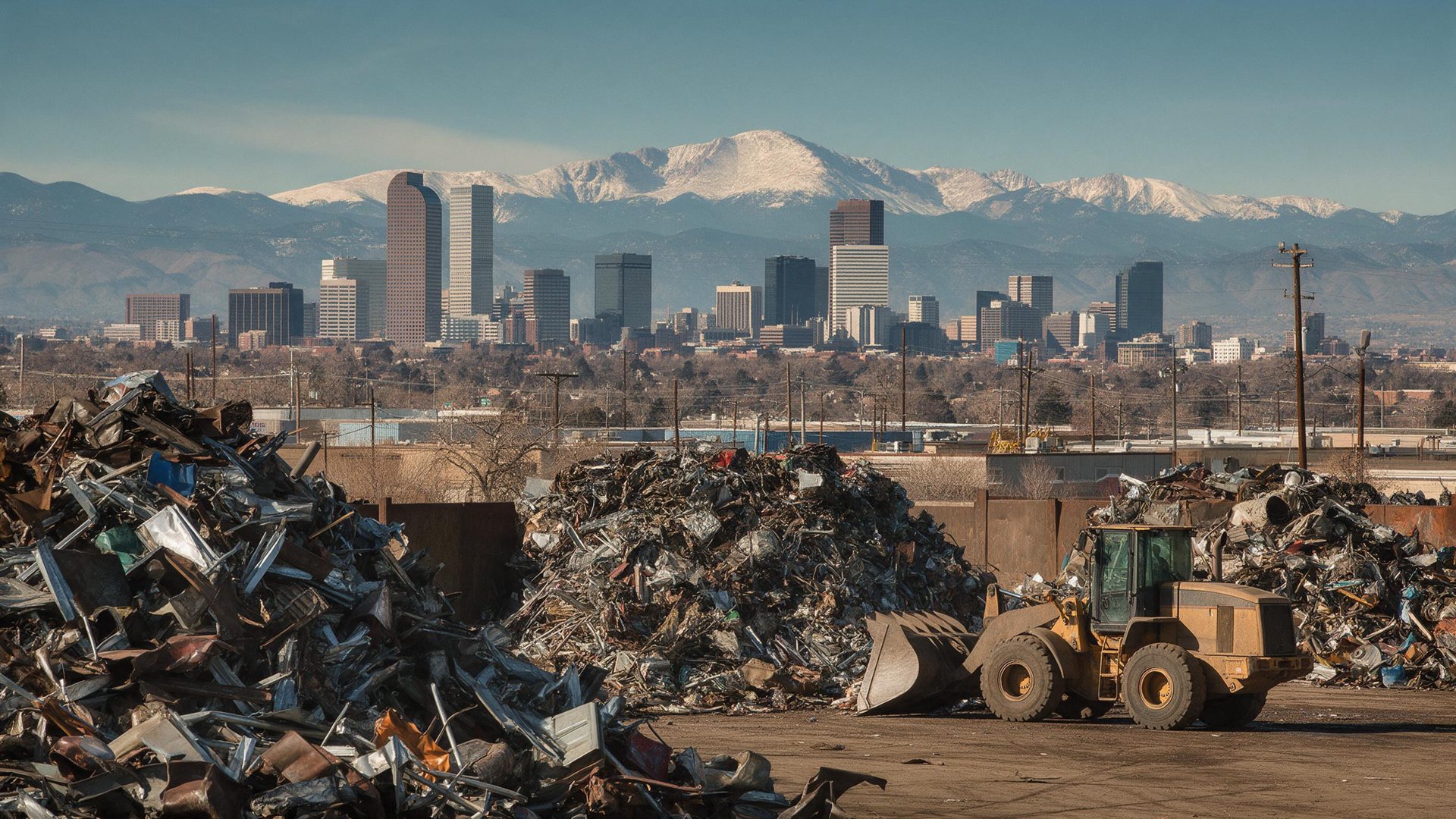
Westminster scrap is corridor houses, not mountain sheds
Westminster’s older sections remodel like the rest of the northwest metro: copper, a furnace, appliances. The later growth toward the Boulder turnpike adds office-support commercial scrap and newer garages. US-36 traffic is the scheduling problem, not the metal.
A small pile may not be worth a dedicated run if the description is vague. Photograph it next to something with a known size, like a garage door, so a partner can judge the stop.
Local prices vary by yard. Send a photo for a quote. We do not publish a Westminster scale sheet.
Denver Scrap is an independent referral service that connects you with local scrap yards.
Contractor scrap form · Gold and silver · Cash for cars
Sort Westminster scrap by metal and condition
Before combining a load, separate ferrous metal from non-ferrous metal. Iron and most steel are ferrous; copper, brass, and aluminum are not. A magnet is a useful first check: if it sticks, the piece is likely steel or iron. It is only a sorting aid, not a grade test. Some stainless steel is weakly magnetic or not magnetic, so ask the yard how it wants that material identified.
Keep copper types apart when you can. Clean, uncoated copper wire may qualify as bare bright, while clean copper pipe or tubing may fit a #1 category. Solder, paint, heavy oxidation, or attached fittings can affect grading; lower-cleanliness material may be classed differently, including as #2. Yard definitions vary, so do not assume a piece will receive a particular grade based on appearance alone.
Separate aluminum from steel and copper, and keep distinct items such as cans, cast parts, and siding apart if practical. Dirt, insulation, plastic, and mixed attachments add weight without adding recoverable metal and can change how a yard grades a load. Stripping insulated wire may improve its grade, but takes time and creates waste. Compare the effort with the likely value before stripping it.
Prepare Westminster scrap for a safe handoff
Do not cut refrigerant lines or dismantle a refrigerator, freezer, or air conditioner to make it easier to haul. Refrigerant needs proper recovery before equipment is scrapped. Ask the receiving yard whether it accepts the appliance and whether it requires proof of evacuation or a separate drop-off. Remove loose food and personal items, but leave sealed cooling components intact until you have clear instructions.
For pickup, sort small material into sturdy, labeled containers and keep sharp edges, loose wire, and heavy pieces secured. Do not overload boxes or place mixed metal where it can shift during lifting. Keep access clear and tell the partner yard about stairs, tight access, or oversized pieces when requesting a quote. A clear description helps the yard assess handling needs before dispatch.
Front Range Quotes connects sellers with independent partner yards; it does not buy scrap itself. The partner yard sets its own grading and acceptance rules and handles the scale ticket, payment, and any required identification. Confirm those details with the yard before the load moves. For catalytic converters or other restricted-to-handle items, ask in advance what documentation or identification the yard requires; requirements can vary.
Questions
Should I strip insulated copper wire before selling it?
Usually, stripping is worthwhile only when the extra labor and tool time make sense for the amount and type of wire. Insulation removal can expose cleaner copper, but it also leaves plastic waste. Ask the partner yard how it grades insulated wire and bare copper before spending time on a small quantity.
Can I put a refrigerator or air conditioner in a regular scrap load?
Do not assume it can go with ordinary metal. Cooling equipment may contain refrigerant that must be recovered properly, and yards can have different acceptance or documentation rules. Contact the receiving yard before moving it, and do not cut lines or try to vent refrigerant yourself.
What should I bring for a catalytic converter?
Call the receiving yard first and ask whether it accepts the converter and what paperwork or identification it requires. Requirements can differ by yard and item. Keep the converter intact and be ready to explain where it came from; do not rely on a general scrap quote as confirmation of acceptance.
Will a magnet tell me what grade my scrap is?
No. It can help distinguish many iron and steel items from non-ferrous metals, but it does not determine the yard’s grade. Some stainless steel behaves differently, and a magnet cannot distinguish copper grades or aluminum types. The partner yard makes the final classification under its own grading practices.
What should I confirm before a scrap pickup?
Ask which materials the yard will accept, how it will weigh and grade them, and what identification it needs. Confirm the pickup location, access, and any handling limits for large or heavy items. The partner yard provides its scale ticket and handles payment; clarify the process directly before scheduling.